
Description
Industrial Nuts – Types, Applications, and Benefits
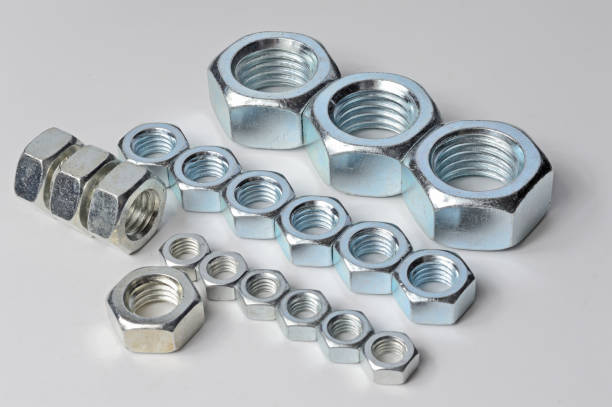
Industrial Nuts play an important role in fastening and assembly applications across multiple industries. These threaded fasteners work together with bolts to create strong, secure, and reliable connections between different components. Therefore, industries use Industrial Nuts in machinery, construction, fabrication, automotive, infrastructure, and heavy engineering projects. Moreover, the right industrial nut improves safety, stability, and long-term operational performance.
Manufacturers produce Industrial Nuts in different shapes, sizes, materials, and grades to match specific industrial requirements. Common materials include Stainless Steel, Carbon Steel, Alloy Steel, and Brass. In addition, these materials provide excellent corrosion resistance, high tensile strength, and durability in harsh environments. Manufacturers also apply finishes such as Zinc Plated, Galvanized, and Black Oxide coatings to improve rust protection and extend product life.
Industries use several types of Industrial Nuts for different fastening applications. For example, Hex Nuts provide strong general-purpose fastening for machinery and structural assemblies. Similarly, Lock Nuts prevent loosening caused by vibration and heavy movement. Flange Nuts distribute pressure evenly and reduce the need for separate washers. Furthermore, Nylock Nuts include a nylon insert that improves grip strength and fastening security. As a result, Industrial Nuts support both light-duty and heavy-duty industrial operations.
Industrial Nuts serve many industries, including manufacturing, automotive, construction, conveyor systems, material handling equipment, and engineering projects. Their strong fastening capability improves machine stability, equipment safety, and structural performance. Consequently, industries rely on high-quality Industrial Nuts for dependable and long-lasting fastening solutions.
Industrial Nut Dimensions
| Thread Size | Across Flats (mm) | Thickness (mm) | Standard Pitch (mm) | Common Grade |
|---|---|---|---|---|
| M4 | 7 mm | 3.2 mm | 0.7 | 8 |
| M5 | 8 mm | 4 mm | 0.8 | 8 |
| M6 | 10 mm | 5 mm | 1.0 | 8 |
| M8 | 13 mm | 6.5 mm | 1.25 | 8 / 10 |
| M10 | 17 mm | 8 mm | 1.5 | 8 / 10 |
| M12 | 19 mm | 10 mm | 1.75 | 8 / 10 |
| M16 | 24 mm | 13 mm | 2.0 | 8 / 10 |
| M20 | 30 mm | 16 mm | 2.5 | 8 / 10 |
| M24 | 36 mm | 19 mm | 3.0 | 8 / 10 |
At N.M Enterprises, we supply premium-quality Industrial Nuts in multiple sizes, materials, grades, and finishes. Furthermore, our fastening solutions deliver superior strength, durability, precision, and reliable performance for industrial applications across India.
Reviews
There are no reviews yet.